
Finding Serenity in Small Spaces: Designing Your Minimalist Pooja Room
Is your home a sanctuary, or a cluttered battleground of possessions? In today’s fast-paced world, the desire for peace and spiritual connection is stronger than ever. Creating a dedicated minimalist pooja room, a space for quiet contemplation and prayer, can be the key to unlocking that inner calm. But how do we achieve this in the often-limited space of modern homes?
The concept of a dedicated prayer space isn’t new. From ancient Roman household shrines to the intricately carved Buddhist temples, humanity has always sought to create sacred spaces, reflecting cultural beliefs and personal devotion. However, the modern context presents a unique challenge: space. Our homes, especially in urban environments, are often smaller than previous generations, forcing us to reconsider our approach to sacred design. A minimalist pooja room isn’t about sacrificing devotion; it’s about refining it, focusing on essence over excess. Think of it as a spiritual decluttering, shedding the unnecessary to reveal the truly meaningful.
Imagine a traditional pooja room, often overflowing with statues, decorative items, and perhaps even accumulated offerings. This can become visually overwhelming, hindering rather than enhancing the meditative experience. A minimalist pooja room, on the other hand, prioritizes simplicity and functionality. A single, meaningful deity statue, a clean altar cloth, a few essential offerings – this curated selection allows for a deeper connection with the divine, unburdened by visual distractions. It’s like clearing the mental clutter to allow for clearer spiritual focus.
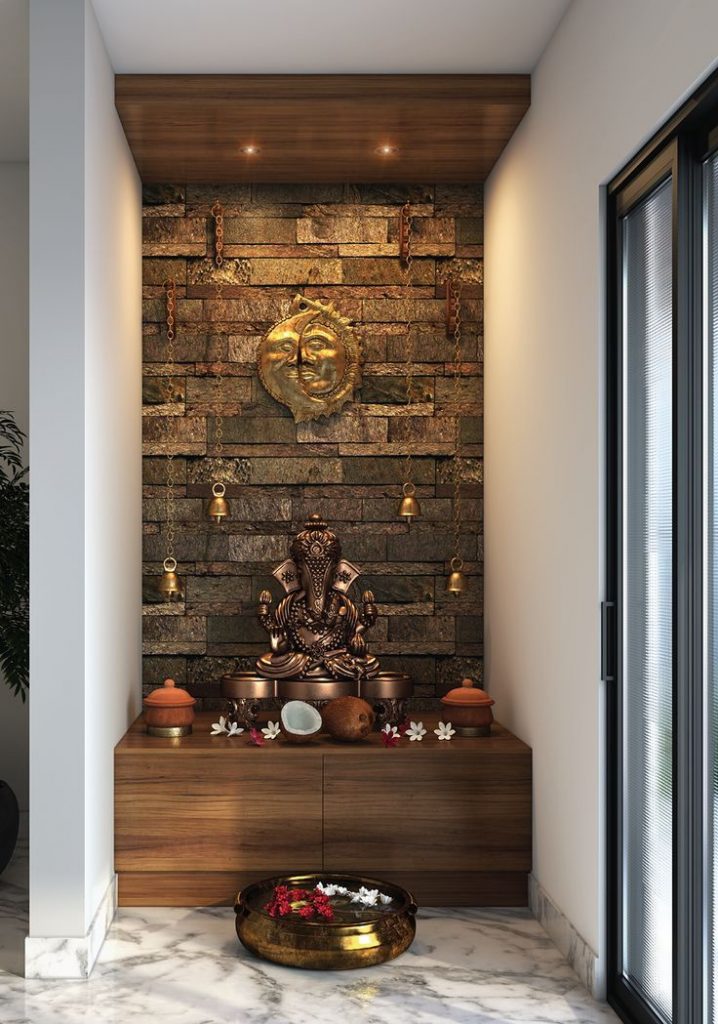
This isn’t about stripping away all elements of tradition; it’s about mindful selection. Consider using natural materials like wood and stone, reflecting the earth’s grounding energy. Subtle lighting, perhaps a single diya or a soft LED lamp, creates a peaceful ambiance. Instead of numerous photographs, opt for a single, cherished family portrait. The space becomes a reflection of your inner peace, a microcosm of your spiritual journey. Think of it as a modern interpretation of the ancient principle of "less is more," applied to sacred space.
The shift towards minimalism isn’t just a design trend; it’s a reflection of a broader cultural shift towards mindful living and intentional consumption. Studies on the impact of clutter on mental well-being increasingly highlight the link between a cluttered environment and increased stress levels (source: A Minimalist Life by Joshua Becker). Creating a minimalist pooja room is therefore not just aesthetically pleasing; it’s a proactive step towards mental and spiritual well-being.
However, the challenge remains: how do we balance tradition with minimalism? This requires a conscious and thoughtful approach. We must ask ourselves: what truly holds spiritual significance? What elements can be respectfully streamlined without compromising our devotion? The answer is unique to each individual, a personal journey of self-discovery reflected in the design of their minimalist pooja room.
The future of sacred spaces will likely see a continued embrace of minimalism. As urban living intensifies and our awareness of environmental sustainability grows, the need for intentional and mindful living, reflected in every aspect of our homes, will only become more pronounced. The minimalist pooja room is not just a trend; it’s a reflection of a deeper cultural shift towards simplicity, intentionality, and a profound connection with the spiritual.
So, are you ready to embark on this journey of mindful design? Start by decluttering your existing pooja space, identifying the truly meaningful items. Then, focus on creating a serene and functional space that supports your spiritual practice. Your minimalist pooja room awaits – a sanctuary of peace and serenity in the heart of your home.